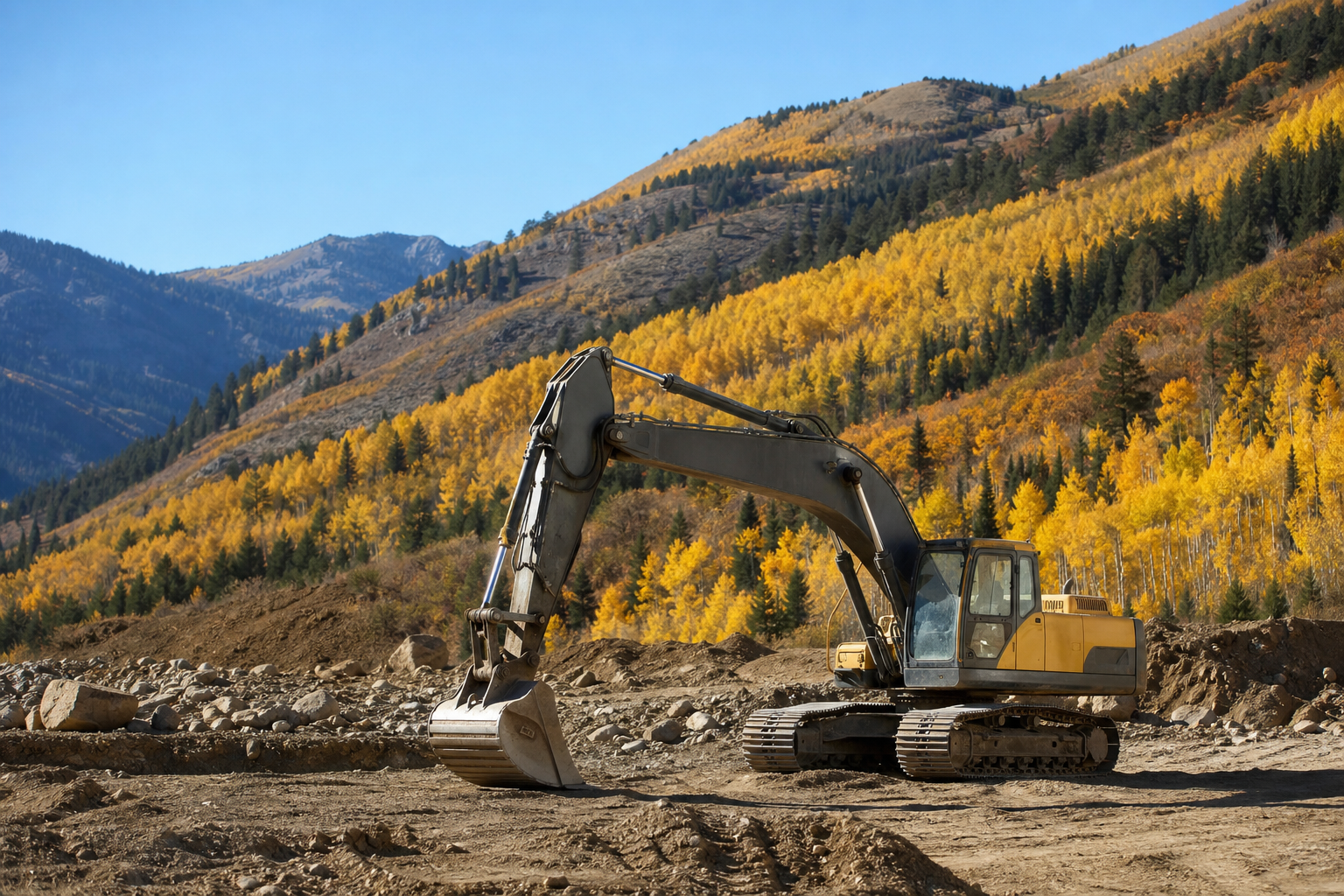
Late-Season Excavation Near Wasatch County: What October Still Allows
In the Heber Valley, October is the month when property owners start asking whether there is still time. Snow is coming to the Wasatch Back sooner than it does down in the valley, and anyone with a project half-planned is trying to work out whether to push it through or park it until spring.
The short answer: quite a lot of excavation work is still practical in October and well into November, but the sequence matters and some tasks genuinely should wait. Here is how we think about it.
The frost line sets the rules
Footings have to bear below the frost line, and in the higher-elevation parts of Wasatch County that requirement is deeper than in the valleys — jurisdictions in the county commonly require footings around 36 inches deep, and requirements vary by jurisdiction and elevation. Your building department is the authority on the exact number for your parcel.
That depth requirement does not stop you from digging in October. What changes as the season progresses is the surface layer. Frost works down from the top, gradually. Early on it is a crust; by January it is a layer that costs real machine time to break through and makes clean work harder.
Elevation and aspect matter here more than the calendar. A north-facing lot in Kamas at 6,500 feet behaves very differently from a south-facing lot in Springville. Two projects starting the same week can have completely different windows.
What still works well right now
Basement and foundation excavation. The soil below the crust is unfrozen and digs normally. The real constraint is what follows — concrete work in cold weather requires protection and adds its own scheduling pressure.
Demolition. Removing an old structure, shed or foundation goes fine in cold weather. Fall demolition is a good way to have a site clean and ready to build the moment spring opens.
Lot clearing. Easier after the leaves come down, and firm ground means less rutting than working a soft, wet site.
Utility trenching. Workable now, harder later, for the same frost reasons.
Driveway base work. Placing and compacting road base is fine while material and subgrade are unfrozen. Once either is frozen, compaction becomes unreliable.
What should probably wait
Anything needing exact final grade. Soil placed frozen settles when it thaws. A finish grade set in December may be visibly wrong in April.
Compaction-critical structural fill. Building pads need proper moisture content and proper compaction, and frozen material delivers neither.
Concrete flatwork you are not prepared to protect. Cold-weather concrete is entirely doable with the right precautions, but it needs to be planned, not improvised.
Seeding. Not going to establish this late. Fall stabilization means mulch, erosion blankets and straw rather than a stand of grass.
The rule that matters most: reach a stable stopping point
If there is one thing to take from this, it is that a project should never go into winter half-finished in a way that leaves the site vulnerable.
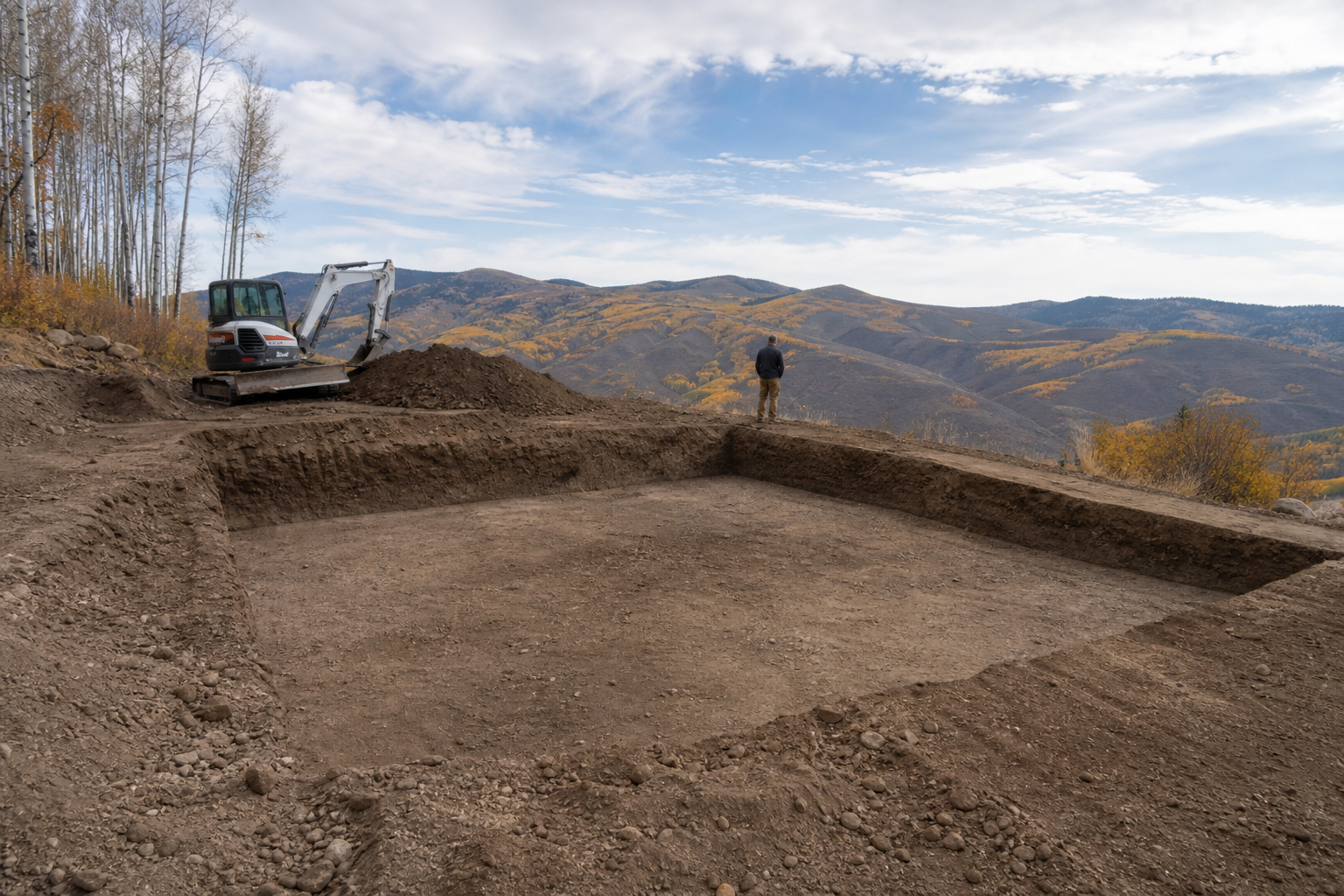
An open excavation left through a Wasatch winter fills with snow, thaws unevenly, sloughs at the sidewalls, and turns to a saturated mess in the spring. Disturbed slopes with no cover erode during melt. Trenches that were backfilled with frozen clumps settle and leave a sunken line across the property.
So before you start something in late October, ask your contractor a direct question: if the weather turns hard in three weeks, where will this site be, and is that a safe place to leave it? A good answer means you can start with confidence. A vague one means you are the person who will be dealing with it in April.
Do not forget the approvals
Excavation, septic installation and site work in Wasatch, Summit, Utah and Salt Lake counties generally involve permits, and septic work in particular runs through the local health department with site evaluation and inspection steps that cannot be compressed.
Every contractor and every homeowner is trying to finish before winter, which means the queue is at its longest exactly when you need it to be short. If your project depends on an approval, the paperwork should already be in motion. Plenty of fall projects die not because of weather but because the permit landed in December.
Fall has real advantages
It is worth saying that fall is genuinely a good season to do this work, not merely a tolerable one. Sites are typically drier and firmer than in the spring runoff, equipment moves cleanly, dust is down, and you go into the building season with your site work already done instead of waiting behind everyone who put it off.
For anyone building next year, doing excavation, utilities and site prep this fall is often the single best schedule decision available — provided the site gets left stable.
Getting a straight answer for your property
Whether your specific project fits this season depends on elevation, aspect, soil, what the work involves and where you sit in the approval process. That is a site-specific question, and it is worth asking before you commit.
Smooth Hollow Excavating, owned and run by Joseph Nelson, provides excavation, septic installation, site preparation, grading, retaining walls, utility trenching and demolition across Wasatch, Summit, Utah and Salt Lake counties, including Heber, Midway, Kamas, Provo, Orem, Springville, Spanish Fork, American Fork, Lehi, Draper and Sandy. If you are trying to decide between starting now and waiting for spring, send us your project details and we will tell you honestly which one makes more sense.
